
Difference between Migraine and Headache – Both Headache and Migraine result in pain in the head; however, their causes, symptoms, and intensity may differ. Migraine is a Neurological Disorder in which a headache can accompany vomiting, nausea, and sensitivity to light and sound. In the right diagnosis and treatment, both these disorders can be controlled.
Key Takeaways
- According to WHO, 40% of the global population suffers from Headache Disorders.
- The frequency of Migraine is twice more in women than in men.
- A migraine attack can last for a period between a few hours and 72 hours, whereas a common Tension Headache lasts for a varying period of time.
What Is a Headache?
Headache or migraine is a common condition in which there is pain or pressure in the head, forehead, jaw or neck. It can be mild, moderate or severe, and it has many causes. If your headache is caused by working for long hours, stress, lack of sleep or drinking too little water, it may be a common headache.
Some of the types of headaches include:
- Tension headache: Headache characterized by a sense of pressure or pulling on both sides of the head.
- Cluster headache: Pain experienced around the eyes or one side of the head at specific intervals.
- Sinus headache: Pain felt in the face and forehead due to sinusitis.
Not all headaches are migraines. The type of headache is determined by the nature of the pain, its duration and other symptoms.
What Is a Migraine?
Migraine can be defined as a neurological condition that is characterized by frequent and intense headaches. The migraine is usually associated with throbbing pains on one side of the head. At times, the pains are felt on both sides. During a migraine episode, a person usually becomes very sensitive to sounds, bright light, and strong smells. Vomiting and nausea are symptoms of the conditions, and movement worsens the situation. At times before the occurrence of the attacks, a person experiences an aura whereby there are flashing lights in front of the eyes and wavy lines. It could cause temporary blindness.
Difference Between Migraine and Headache
The difference between migraine and headache is found in their symptoms, the type of pain and their effect on daily activities.
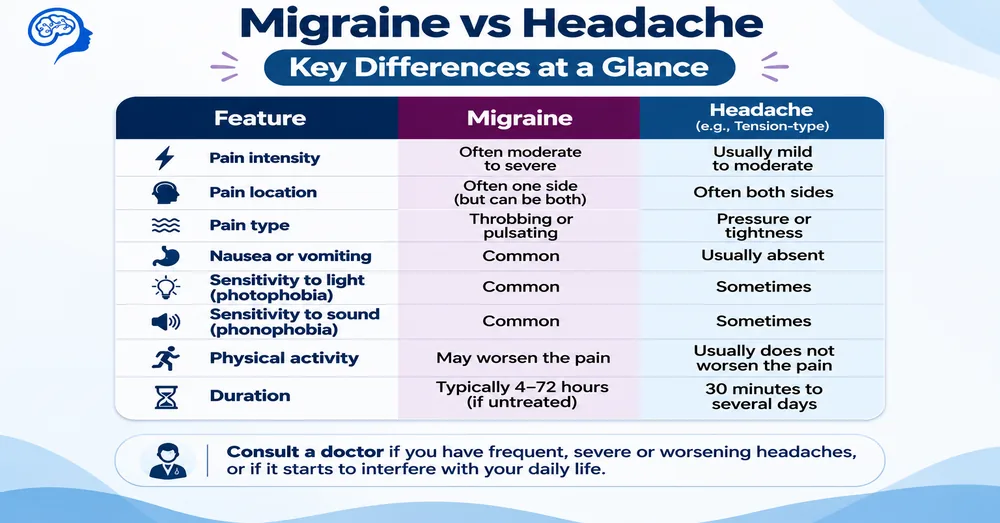
| Basis | Common Headache | Migraine |
| Location of pain | Often on both sides of the head | One or both sides |
| Type of pain | Pressure or tightness | Throbbing pain |
| Intensity of pain | Mild to severe | Moderate to very severe |
| Nausea or vomiting | Usually not | May occur |
| Sensitivity to light and sound | Less common | Quite common |
| Physical activity | Pain does not necessarily increase | Pain may increase |
| Duration | Varies by type | 4 to 72 hours |
An early difference can be understood from these symptoms, but a doctor’s advice is necessary for a proper diagnosis.
What Are the Symptoms of Migraine and Headache?
Knowing the symptoms of migraine and common headache will help you find out which type of headache you have.
Symptoms of a common headache:
- You feel pain or pressure on both sides of your head.
- You feel tightness in or near your forehead.
- You have tightness in your neck and shoulders.
- You get a headache after working for a long time.
- The pain gets worse with stress or fatigue.
Symptoms of migraine:
- You feel a throbbing pain on one side of your head.
- You have nausea and vomiting.
- Bright light bothers you.
- Loud sounds and smells bother you.
- Physical activity makes the pain worse.
- In some cases you may see flashes of light or blurred vision in front of your eyes.
Migraine symptoms are different for every person. Some people have an aura, while many people have migraine without an aura.
What Causes Migraine and Headache?
Migraine headaches and common headaches have different causes. In many cases, lack of sleep, stress and an irregular routine make both types of headache worse.
Causes of common headache:
- Mental stress and anxiety.
- Lack of sleep.
- Long use of screens.
- Dehydration.
- Tension in the neck and shoulder muscles.
Factors that trigger migraine:
- Changes in sleep timing.
- Going without food for a long time.
- Hormonal changes in women.
- Bright lights and loud sounds.
- Eating or drinking certain things, such as alcohol, in some people.
- Stress and sudden relief from stress.
Migraine triggers are different for every person. Keeping a headache diary can help someone find out in which situations their headache gets worse.
How Are Migraine and Headache Diagnosed?
Doctors diagnose migraine and headache based on your symptoms, the duration of the pain, the location of the pain and your medical history. Your doctor may ask you about the frequency of the headaches, the duration of the pain, and whether there is vomiting, fever and sensitivity to light. If needed, a neurological examination or further tests may be recommended to rule out the causes of serious headaches.
What Is the Treatment for Migraine and Headache?
The treatment of migraine and common headache depends on their causes and symptoms.
Treatment of common headache:
- Drink plenty of water and rest.
- Sleep regularly.
- Give your eyes some rest.
- Take painkillers if needed.
Treatment of migraine:
Your doctor may recommend triptans or other suitable migraine medicines for acute attacks when needed. Preventive medicines may also be necessary for frequent migraine attacks.
Medicines are chosen according to the person’s history and other medical conditions. Excessive use of painkillers can itself cause headaches from medication overuse, so do not take them without a doctor’s prescription.
When Should You See a Doctor for Migraine or Headache?
If you have frequent headaches, or the pain becomes very severe, or it is affecting your daily life, you should see a doctor. Some symptoms need immediate medical attention.
- A sudden, very severe headache that you have never had before.
- A headache with problems speaking or seeing.
- Weakness or numbness on one side of the body.
- Neck stiffness with fever.
- A severe headache after a head injury.
- Fainting, convulsions and confusion.
For such symptoms, do not wait for your appointment; go to the nearest hospital immediately.
Migraine Treatment in Jaipur – Dr. Sanjay Jain
If you live in Jaipur and have frequent headaches, migraine and related problems, it will be beneficial to meet a specialist. A psychiatrist in Jaipur, Dr. Sanjay Jain, diagnoses and treats mental health problems. Recurring headaches can also be caused by stress, anxiety and sleep problems, but a migraine diagnosis should take other possible causes, such as nerve disorders, into account.
Instead of ignoring your problem, consult the right specialist.
Conclusion
The difference between migraine and headache should be clear for you as the symptoms and treatment of these conditions may be different. While a headache can appear due to stress, tiredness or lack of sleep, migraine is a neurological disorder and is accompanied by other symptoms such as vomiting, sensitivity to light and throbbing pain. Do not neglect headaches in case you suffer from them as proper treatment can ease your condition.
FAQs – Difference Between Migraine and Headache
1. How are migraines and headaches different from each other?
A typical headache causes one to have a pressure sensation or a tight pressure sensation around the head whereas in the case of a migraine headache, there can be throbbing pain, vomiting and sensitivity to light or sound. Migraine is a neurologic condition.
2. How can I identify if I have migraine headache?
If your headache is accompanied by vomiting, nausea and sensitivity to light and the pain worsens during walking then you are probably experiencing migraine and should consult a physician about the same.
3. Is it possible to suffer migraine without headache?
Yes it is possible to have the symptoms of migraine without having any headache. The symptoms may be like having bright lights, zigzag vision and loss of vision.
4. For how long does the migraine attack last?
The migraine attack lasts usually from 4 hours to 72 hours.
5. Can stress trigger a migraine attack?
Yes, stress can trigger a migraine attack.
6. Is migraine more dangerous than a common headache?
Migraine may be more dangerous than a common headache as it can negatively impact your productivity and performance at work and in school. Frequent migraines should be treated.
7. Who should I visit for my migraine?
In case of frequent headaches or migraines, you should consult either a neurologist or a doctor. In case of sleep and stress issues, the advice of a psychologist will also be useful.