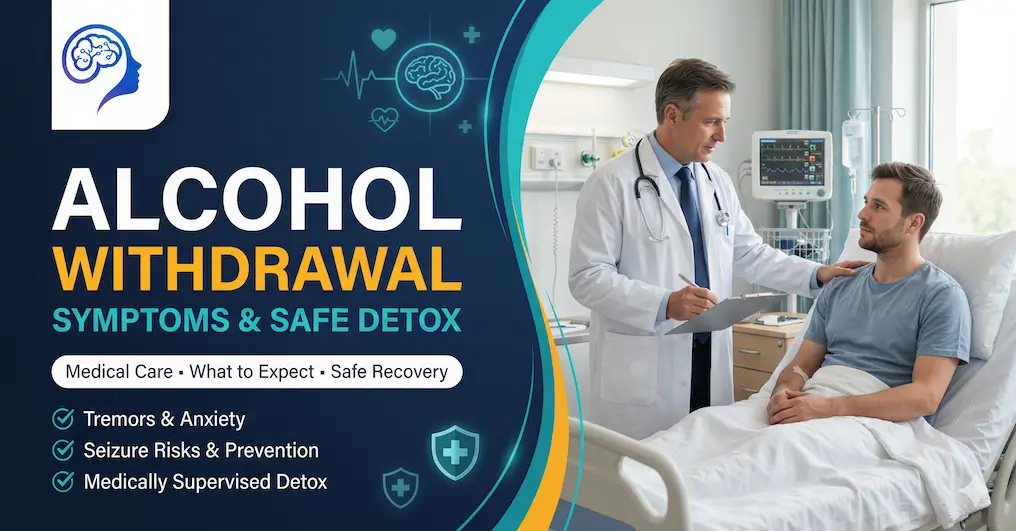
Alcohol withdrawal syndrome happens when a heavy drinker suddenly cuts back on drinking alcohol. Common alcohol withdrawal symptoms include trembling, sweating, anxiety, nausea, and trouble sleeping. In the case of severe withdrawal, one may experience fits, hallucinations, and Delirium Tremens (DT). DT can sometimes be fatal and medical supervision is needed.
Key Takeaways
- Alcohol withdrawal symptoms start within 6 – 24 hours since the time of your last alcoholic drink, before the alcohol leaves the body.
- Delirium Tremens can include delusions, hallucinations, fever, and convulsions. DT is the most dangerous withdrawal complication that you could have.
- It is much more than just stopping alcohol; patients need medically supervised withdrawal from it because of their physical addiction to it.
What Is Alcohol Withdrawal & why does it happen?
Withdrawal from alcohol is a series of physical and mental symptoms that might emerge due to sudden cessation or significant decrease in consumption after heavy and regular alcohol drinking.
With repeated alcohol intake, the body of the person adjusts to the effect of alcohol on his/her nervous system; and with the abrupt removal of alcohol, the nervous system becomes overexcited, thus leading to withdrawal symptoms.
If you drink alcohol regularly and you feel shaky and sweaty, get anxious or have trouble sleeping as you are trying to quit drinking, these alcohol withdrawal symptoms might indicate physical dependence to alcohol.
Important Note: If you are physically dependent on alcohol, do not attempt to quit cold turkey without consulting your doctor. Alcohol withdrawal can lead to complications.
Common alcohol withdrawal symptoms
Most symptoms are mild to moderate:
- Shaking hands (tremors), especially in the morning
- Sweating and a fast heartbeat
- Anxiety, restlessness and irritability
- Trouble sleeping and bad dreams
- Nausea, vomiting and loss of appetite
- Headache
- A strong craving to drink “just to feel normal”
If a morning drink makes the shaking stop, that is a sign the body has become dependent on alcohol.
Alcohol withdrawal timeline
Every person is different, but alcohol withdrawal symptoms usually follow this pattern after the last drink:
| Time after last drink | What can happen |
|---|---|
| 6 to 12 hours | Shaking, sweating, anxiety, nausea, poor sleep |
| 12 to 48 hours | Symptoms peak. Some people see or hear things that are not there (alcoholic hallucinosis) |
| 24 to 48 hours | Highest risk of withdrawal seizures (fits) |
| 48 to 72 hours | Delirium tremens can start in severe cases |
| 4 to 7 days | Most physical symptoms settle with proper treatment |
Lack of quality sleep, depression and appetite can go on for several weeks after the resolution of the other physical symptoms. This is the time where relapse is most probable hence the need to provide support.
When does alcohol withdrawal get to a critical stage?
The following cases call for an immediate visit to a hospital or by dialing 108:
- Seizure (fit), whether self-resolving
- Confusion and disorientation about the surrounding including inability to recognize their family member
- Hallucinations – seeing bugs, persons or shadows that are not there
- Experiencing severe tremors in the entire body accompanied with profuse sweating and fever
- Heart palpitations, chest pain and difficulty in breathing
- Vomiting uncontrollably making it impossible to retain water
Confusion, hallucination, fever and tremors together suggest delirium tremens (DTs). It’s a critical situation. With proper medical attention most people recover entirely. Otherwise it could turn deadly.
Why home detox can be risky
Many individuals attempt to undergo the process of withdrawal quietly within the safety of their own homes, out of fear of judgment by friends or neighbors. This fear is perfectly natural. However, for a heavy drinker, withdrawal at home can be dangerous due to four factors:
- There is no way to anticipate or avoid seizures.
- The symptoms may unexpectedly worsen on day 2 or 3 when the individual felt fine on day 1.
- Unprescribed sleeping pills used in combination with the other methods and alcohol itself may cause breathing problems.
- Heavy drinkers usually lack vitamin B1 (thiamine), and if left untreated, it may lead to irreversible mental problems.
There is also an emotional side to the problem. Withdrawal is so unpleasant an experience that many individuals turn to alcohol again just to stop it, and feel ashamed for that afterwards. This is not weakness or lack of willpower; it is the body’s need, and it can be addressed.
How to detox from alcohol safely
Detoxification, the main alcohol withdrawal treatment, refers to stopping alcohol intake while being monitored by the doctor for the symptoms and their treatment. It normally includes:
- An initial assessment where the doctor inquires into the amount and duration of alcohol consumption, previous cases of withdrawals or fits, and other diseases. The blood tests look at the condition of the liver and electrolytes.
- Medication to stabilize withdrawal symptoms. The doctors prescribe medicines for a short period that calm down the brain and prevent the seizures. They should be used strictly as prescribed.
- Vitamins and fluids, particularly thiamine, which help prevent brain damage.
- The proper setting, where mild withdrawal can be controlled with the help of daily visits to an outpatient clinic and a responsible family member at home. Moderate and severe withdrawal, and all cases of previous seizures require admission to the hospital or de-addiction centers.
Most patients undergo detoxification within 5-7 days.
After detox: staying alcohol-free
Detox cleans the body. It doesn’t treat the causes of drinking. Recovery needs things like:
- Talk therapy to control triggers, stress and cravings
- Medicines that can reduce cravings, on doctor’s advice
- Treating any anxiety disorder, depression or sleep problems that can come with excessive drinking
- Help from your family and other support groups like AA (Alcoholics Anonymous)
Learn more about the dangers of excessive drinking and de-addiction treatment on our blog on why alcohol is among the most dangerous drugs.
Alcohol de-addiction treatment in Jaipur
Dr. Sanjay Jain (MD Psychiatry, SMS Medical College; RMC Reg. No. [number]) provides safe and confidential alcohol de-addiction therapy at his clinic, located close to Gopalpura Bypass, Jaipur. This involves medical detoxification, medications to help cope with detox and cravings, counseling for both the patient and family, and aftercare management, in Hindi or English, face-to-face or online. More about alcohol and substance abuse treatment in Jaipur.
Conlcusion
If you or your loved one wants to quit drinking, book a confidential appointment with Dr. Sanjay Jain of Jaipur. Call [phone] or book online. If there is a seizure or confused state, seek immediate help in the nearest emergency department or call 108. For free counseling on mental health, anytime, call Tele-MANAS at 14416.
FAQs: Alcohol Withdrawal Symptoms
How long will alcohol withdrawal symptoms take to disappear? It takes about 4 to 7 days for physical symptoms. Sleep disturbances, depression, and cravings can last for a few weeks.
Can I stop drinking suddenly without any help? You can safely quit if you consume alcohol occasionally. But if you consume alcohol regularly, or feel tremors, sweating, consult a doctor before you quit.
Is there any risk involved if I try quitting alcohol without professional help? The process of quitting alcohol consumption gradually on your own is quite difficult and unpredictable. The doctor can devise a plan for quitting in a controlled manner.
Will it be known that I am under treatment? No. Your treatment remains strictly confidential until you share this information.