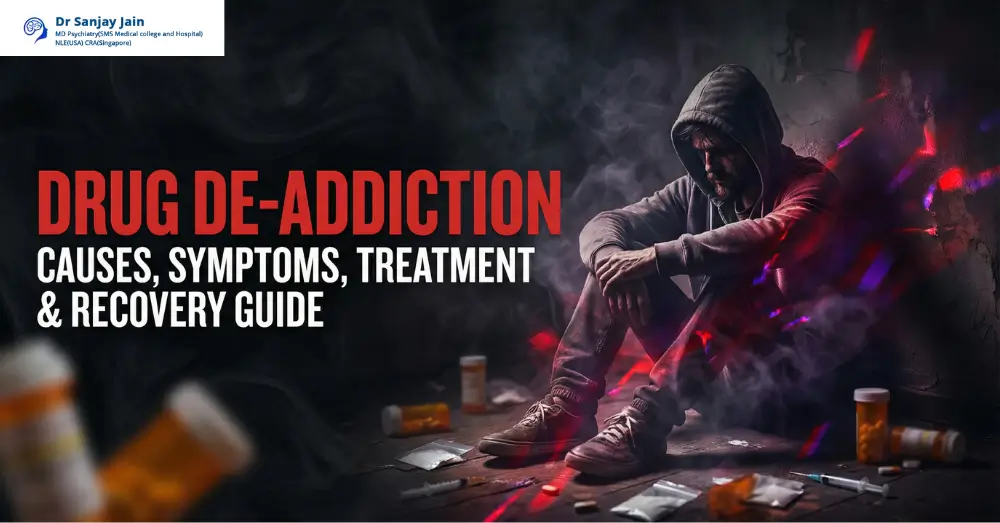
Have you ever noticed someone from your circle, once full of energy and always up for conversations, now remains silent, zoned out, and haunts everyone with red eyes and shaky hands?
Sometimes such changes caused by drug addiction remain unnoticed until one day, they turn into a serious issue. It begins affecting not just the individual, but entire families and friend groups. Drug addiction affects millions worldwide and in India, creating a silent crisis that demands attention.
The National Survey on the Magnitude of Substance Use (2019) provides important data on the scale of substance use in India. Around 16 crore people drink alcohol, and out of those, more than 5.7 crore need real help because their drinking has turned very harmful. The survey also states that about 2.26 crore people use opioids. These numbers make it pretty clear that people need better treatment and effective recovery services.
However, it is important to remember that drug addiction is not the end. With the right support and treatment, people can recover.
In this guide, we will learn what is the first step in drug de-addiction is, its causes, symptoms, and treatment.
What is Drug De-Addiction?
The process of stopping the use of addictive substances like opioids, cannabis, alcohol, sedatives, or stimulants with medical and psychological support is called Drug De-Addiction. This procedure helps to regain control over the body, mind, and relationships and build healthier coping mechanisms by learning new skills.
Causes of Drug Addiction
Though there is no particular reason that causes drug addiction, there are many factors, like genetics, stress, depression, and peer pressure, that lead to the consumption of such substances.
Let’s look at the most common causes of drug addiction:
- One of the most common causes includes genetic factors. If a person has a family history of substance addiction, he or she is most vulnerable to developing substance abuse.
- Another major cause of addiction usually involves unresolved stress, childhood trauma, abuse, or grief. Such problems make individuals dependent on substances like drugs for temporary relief.
- Mental health issues like depression, anxiety, bipolar disorder, and ADHD can increase the risk of substance use.
- Bad influence, negative environment, and easy availability of drugs increase the chances of misuse.
- Drug addiction can also happen due to peer pressure among teens and young adults.
Signs & Symptoms of Drug Addiction

If a person is consuming drugs, then the symptoms can be easily seen in their behavior pattern, lifestyle, and physical appearance.
Here are some common signs of drug addiction:
- Having no control over drug use is one of the most obvious signs of drug addiction.
- Physical changes in someone, like weight loss, red eyes, poor hygiene, and lack of energy, are other major symptoms of drug addiction.
- Changes in the behavior and attitude of a person tell a lot about whether they consume any substance or not. Such behavior includes social withdrawal, lying about drugs, and showing irritation and anger.
- Continuous use of drugs despite serious health, legal, and relationship issues shows that a person is completely addicted.
- Not going to work, school, or college and skipping daily routine tasks are other common signs of drug addiction.
Effects of Drug Addiction
Drug addiction leads to many problems and affects almost every part of a person’s life in a negative way. From physical health issues to legal troubles, it only causes damage to the lifestyle.
Let’s look at the effects of drug addiction in detail:
- Drug addiction has the power to create heart problems, liver damage, respiratory failure, and weaken the immune system.
- This addiction contains a high risk of depression, anxiety, memory loss, and cognitive impairment.
- Apart from health and mental issues, drug addiction negatively impacts emotions as well and leads to relationship breakdowns, family conflicts, and loss of trust.
- In the case of teens and young adults, this addiction declines their productivity and intelligence. This results in poor academic performance.
- Risk of overdose is one of the most dangerous effects of drug addiction, as repetitive excess use can even cause death.
Drug De-Addiction Treatment Options

Drug De-Addiction treatment is often personalized based on the type of drug consumption, amount, duration, and severity of addiction.
Here are the most widely used treatment options:
- Detoxification (Detox)
The very first step towards Drug De-Addiction begins with Detox. Detoxification involves the withdrawal of harmful substances from the body under medical supervision.
- Medication-Assisted Treatment (MAT)
Certain medications help reduce cravings, control withdrawal, and help the brain slowly adjust without the drug. MAT is commonly used for opioid, alcohol, and nicotine addiction.
- Psychotherapy & Counseling
Therapies such as Cognitive Behavioral Therapy (CBT), Motivational Enhancement Therapy (MET), Dialectical Behavior Therapy (DBT), and counseling help individual understand the root cause of their addiction.
- Inpatient Rehabilitation Programs
Inpatient Rehabilitation programs are basically rehab centres where patients stay for 30 to 90 days. It is a very effective Drug de-Addiction treatment as in such programs the patient is under 24/7 medical supervision, free from triggers, and distracted through intensive therapy sessions.
- Outpatient De-Addiction Programs
After successful rehabilitation, individuals are allowed to live in their home, but scheduled treatment sessions are set up. This way, they can go back to their normal routine, study, or work.
- Support Groups
Taking help from support groups or local recovery circles also makes a positive difference as they provide emotional encouragement and shared experiences, which eventually gives long-term motivation and a sense of belonging.
Read Also: Overcoming Smack Addiction: Steps to Recovery and Support
Importance of Family Support in Recovery
When it comes to Drug De-Addiction, Family support plays a very important role in the recovery journey. Families who offer encouragement and motivation for treatment, rather than blame, are more likely to help their loved ones. Building healthy boundaries, maintaining clear communication, and creating a positive environment for recovery not only support treatment but also keep the family together and make the bond even stronger.
Hence, family therapy is yet another effective way to stay away from drug addiction.
How to Prevent Relapse
Relapse is common in the recovery journey, but that doesn’t mean failure; it is simply a sign that the treatment plan needs a little adjustment and more discipline.
Here are some prevention strategies that help reduce the chances of relapse:
- Identify triggers such as old friendships or certain people, avoid stress, and manage sad emotions that can trigger cravings for drugs.
- Maintain a healthy routine by adding productive outdoor activities, exercise, and a healthy diet to your day.
- Always follow the treatment plan, attend counselling sessions, and don’t miss prescribed medicines.
- Develop coping mechanisms by adapting good habits like deep breathing, meditation, journaling, painting, taking a pet on a walk, or talking to a trusted person.
Read Also: 9 Ways To Break Your Mobile Phone Addiction
When to Seek Professional Help
When drug consumption starts affecting a person’s mental and physical health, it is important to seek professional help as soon as possible. If you or someone you know shows signs of severe drug abuse, like inability to stop consuming drugs, major behavioral changes affecting work or relationships, health problems, or risk of overdose, then they should immediately consult a medical expert or a rehab centre.
Jaipur’s highly qualified psychiatrist Dr. Sanjay Jain MD-Psychiatry (SMS Medical College and Hospital), NLE (USA), CRA (Singapore), believes that by addressing both the brain chemistry of addiction and underlying psychological issues, people with drug addiction can be treated with the right care and treatment.
If someone close to you is struggling with Drug De-Addiction and you are looking for a trustworthy psychiatrist in Jaipur, then Dr.Sanjay Jain is the right choice.
FAQ: Drug De-Addiction
1. What is the first step in drug de-addiction?
The very first step towards Drug De Addiction is detoxification. Detox helps remove substances from the body safely under medical supervision.
2. How long does drug de addiction treatment take?
There is no fixed timeline, as it depends on the type and severity of the drug substance. However, the variation usually varies from 4 weeks to several months.
3. Is drug addiction completely curable?
Yes, drug addiction can be completely curbed through consistent treatment, therapy, and the right advice.
4. Can someone recover without rehab?
Yes, in mild cases, someone can recover without rehab. But moderate to severe addiction often requires rehab for the best results.
5. What are the withdrawal symptoms?
Withdrawal symptoms include nausea, sweating, shaking, anxiety, irritability, mood swings, insomnia, or cravings.