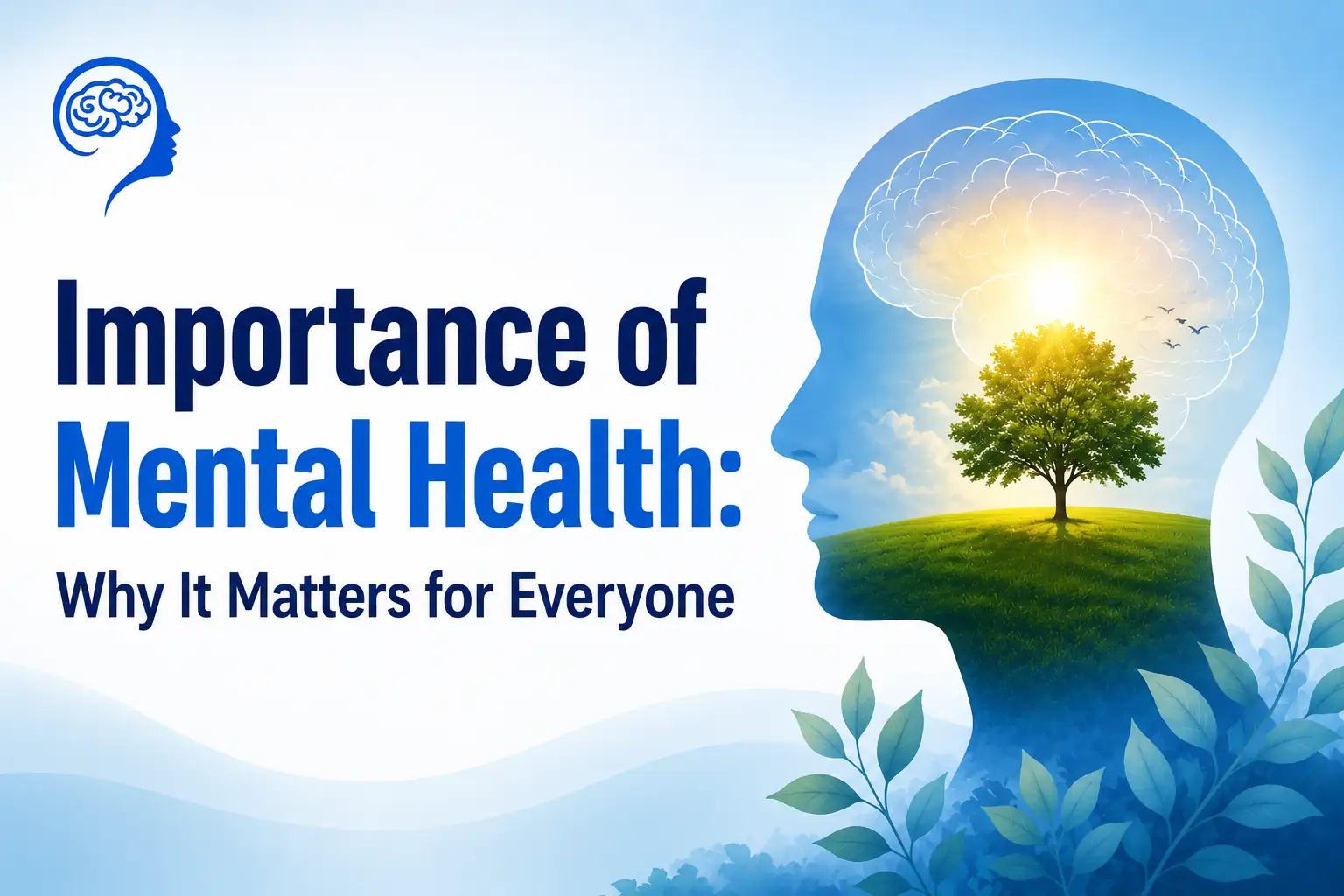
Mental health is more than just mental illness. It affects how we think, feel, handle stress, build relationships, make daily decisions, and how we experience life. Good mental health helps us live happier, healthier, and more balanced lives. It is important to understand the importance of good mental health, talk about it, and encourage people to seek experts if needed.
Have you ever felt so stressed that you couldn’t focus on your work? Or have you spent sleepless nights worrying about problems that just wouldn’t leave your mind?
Most people go through such situations at some point in life. Yet, many choose to ignore them. They assume it is just a bad day, a stressful week, or a phase that will pass on its own. While that may be true sometimes, emotional struggles that continue for weeks or months should never be ignored.
This is why understanding the importance of mental health has become more important than ever. According to the World Health Organization (WHO), around one in eight people worldwide lives with a mental health condition. In India, millions of people struggle with stress, anxiety, depression, addiction, and other mental health concerns every year.
In this blog, we will discuss what mental health means, why it matters, how it affects people of different age groups, and when it may be time to seek professional help.
What is Mental Health?
Mental health is all about how you think, feel, and deal with life.
Just as physical health affects your body, mental health affects your emotions, thoughts, behavior, and relationships. It plays an important role in how you manage stress, solve problems, make decisions, and interact with others.
Having good mental health does not mean you feel happy all the time. Everyone experiences sadness, stress, anger, and disappointment from time to time.
Good mental health means being able to handle these emotions healthily and continue living your life without feeling completely overwhelmed by them.
Importance of Mental Health Awareness
Many people only think about mental health when someone develops a serious mental illness. However, mental health goes far beyond that.
Mental health affects every part of our daily lives.
1. It Helps You Handle Stress Better
Life is full of challenges. Work pressure, family responsibilities, financial concerns, and unexpected situations can create stress.
Good mental health helps you stay calm, think clearly, and deal with these challenges more effectively.
2. It Improves Relationships
Healthy relationships require trust, communication, patience, and understanding.
When you feel mentally well, it becomes easier to connect with others and maintain strong relationships with family, friends, and colleagues.
3. It Improves Focus and Productivity
Mental health directly affects concentration, memory, and decision-making.
Whether you are a student preparing for exams or a professional managing work responsibilities, good mental health helps you perform at your best.
4. It Supports Physical Health
Your mind and body are closely connected.
Long-term stress, anxiety, and depression can affect sleep, weaken immunity, increase blood pressure, and contribute to other physical health problems.
Taking care of your mental health also helps you protect your physical health.
5. It Builds Confidence
People with good mental health often feel more confident about handling challenges and making decisions.
6. It Helps You Adapt to Change
Life changes constantly. New jobs, exams, marriage, parenthood, retirement, and other major events can create uncertainty.
Good mental health helps you adjust to these changes with greater ease.
7. It Improves Overall Quality of Life
One of the biggest benefits of understanding mental health is that it helps people live happier and more fulfilling lives.
When your mind feels healthy, you can enjoy relationships, pursue goals, and appreciate life’s positive moments.
Why Mental Health Awareness Matters?
Even today, many people feel uncomfortable talking about mental health.
Some believe mental health problems are a sign of weakness. Others fear being judged if they seek professional help. As a result, many people continue to struggle in silence.
This is why the mental health awareness cannot be ignored.
Mental health awareness helps people:
- Recognize early warning signs
- Understand that mental illnesses are treatable
- Reduce stigma and misconceptions
- Encourage people to seek professional help
- Support friends and family members who may be struggling
- Promote healthier ways of coping with stress
When people understand mental health better, they become more willing to talk about it openly and seek support when needed. Just as we consult a doctor for physical illnesses, it should feel normal to seek help for mental health concerns.
Mental Health Across Every Age Group
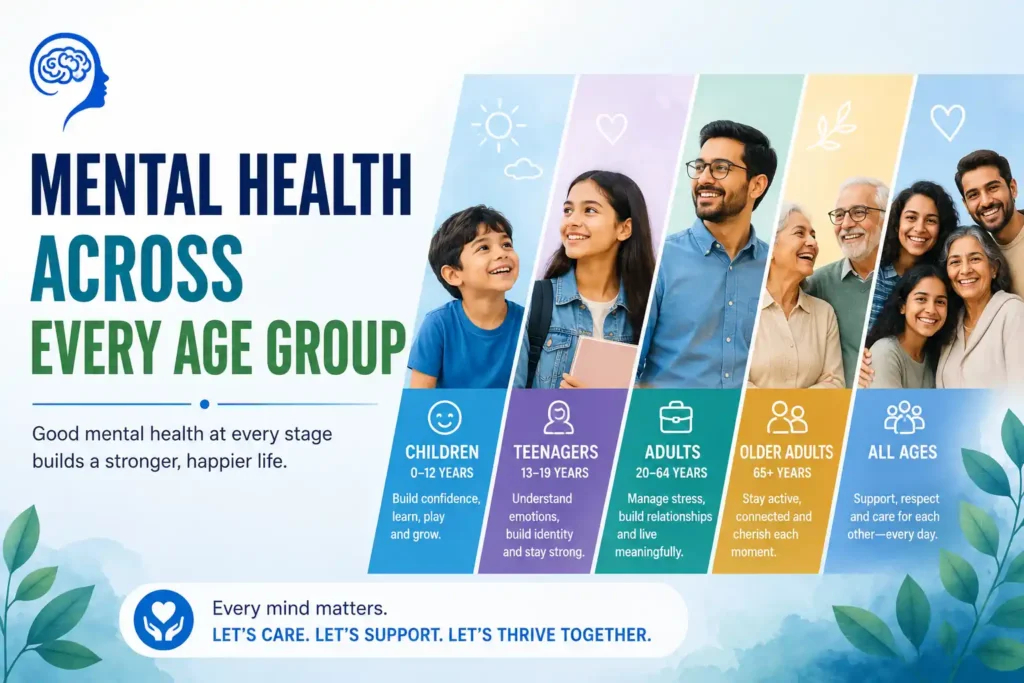
Mental health affects people of all ages. However, the challenges can look different depending on a person’s stage of life.
In Teenagers
The importance of mental health in teenagers has received significant attention in recent years, and for good reason.
Teenagers face many pressures every day. They deal with academic expectations, social media influence, friendships, family dynamics, and concerns about their future.
These pressures can sometimes lead to:
- Anxiety
- Depression
- Low self-esteem
- Stress
- Behavioral problems
- Social withdrawal
Many parents assume mood swings are simply part of growing up. While some emotional changes are normal, ongoing changes in behavior should not be ignored.
Parents should pay attention to signs such as:
- Constant sadness
- Irritability
- Loss of interest in hobbies
- Falling grades
- Changes in sleep patterns
- Avoiding friends and family
Understanding the mental health in teenagers helps parents identify concerns early and provide the support their children need.
In Adults
Adult life comes with many responsibilities.
Balancing work, family, finances, relationships, and personal goals can become overwhelming at times.
As a result, many adults experience:
- Chronic stress
- Anxiety
- Depression
- Burnout
- Relationship problems
- Addiction-related issues
Unfortunately, many adults continue pushing through emotional difficulties without seeking help.
However, emotional well-being is just as important as physical health. Seeking support early can help prevent problems from becoming more serious.
In Older Adults and the Elderly
Mental health remains important throughout life.
Many older adults experience major life changes, including retirement, physical health challenges, reduced independence, or the loss of loved ones.
These experiences can affect emotional well-being and lead to:
- Depression
- Anxiety
- Loneliness
- Sleep problems
- Memory-related difficulties
Many families mistakenly believe these issues are a normal part of aging.
They are not.
Older adults deserve the same attention and care for their mental health as people in any other age group.
With the right support and treatment, many older adults can continue enjoying meaningful and fulfilling lives.
When Should You See a Psychiatrist?
Many people wonder whether their emotional struggles are serious enough to seek professional help.
The truth is that you do not need to wait until things become unbearable.
You should consider consulting a psychiatrist if you experience:
- Constant worry or anxiety
- Frequent panic attacks
- Difficulty sleeping
- Significant mood changes
- Loss of interest in activities you once enjoyed
- Addiction or substance dependence
- Changes in behavior
- Thoughts of self-harm or suicide
Seeking help early often leads to better outcomes.
Dr Sanjay Jain can identify the underlying cause of your symptoms and recommend the most appropriate treatment plan for your needs.
Conclusion
The importance of mental health extends to every stage of life. It affects how we think, feel, communicate, work, learn, and cope with challenges.
Whether you are a teenager facing academic pressure, an adult managing responsibilities, or an older adult adjusting to life changes, your mental health deserves attention and care.
The growing mental health awareness reminds us that mental health is just as important as physical health. Recognizing concerns early and seeking support when needed can make a significant difference in a person’s life.
Remember, asking for help is not a sign of weakness. It is a step toward better health, stronger relationships, and a happier future.
Dr. Sanjay Jain, MD, Psychiatry, NLE (Pennsylvania, USA), CRA (Singapore), believes that everyone deserves access to compassionate, evidence-based mental healthcare. Through awareness, education, and timely treatment, individuals can overcome challenges and lead healthier, more fulfilling lives.
FAQ
1. What is the importance of mental health in daily life?
The importance of mental health in daily life lies in its impact on your thoughts, emotions, relationships, productivity, and ability to handle stress. Good mental health helps you function better and enjoy a higher quality of life.
2. At what age do mental health problems usually start?
Mental health problems can develop at any age. However, many conditions begin during adolescence or early adulthood.
3. Is mental health awareness important in India?
Yes. The importance of mental health awareness in India continues to grow because awareness helps reduce stigma, encourages early treatment, and improves access to mental healthcare services.
4. How do I know if my teenager has a mental health problem?
Warning signs may include sadness, irritability, withdrawal from friends, declining academic performance, sleep changes, and loss of interest in activities they previously enjoyed.
5. Can adults develop mental health issues even if they were fine before?
Yes. Stressful life events, trauma, health conditions, work pressure, and other factors can contribute to mental health problems at any stage of adulthood.
6. Do elderly people also suffer from mental health problems?
Yes. Older adults can experience depression, anxiety, loneliness, memory-related disorders, and sleep problems. These conditions often improve with proper treatment and support.
7. Is it okay to see a psychiatrist without a referral?
Yes. You can consult a psychiatrist directly if emotional or behavioral concerns begin affecting your daily life. For assurance, you can watch online reviews and the authority the doctor holds.
8. What is the difference between a psychiatrist and a psychologist?
Difference between a psychiatrist and a psychologist is that a psychiatrist is a medical doctor who can diagnose mental health conditions, prescribe medications, and provide treatment while psychologist mainly provides therapy, counseling, and psychological assessments.