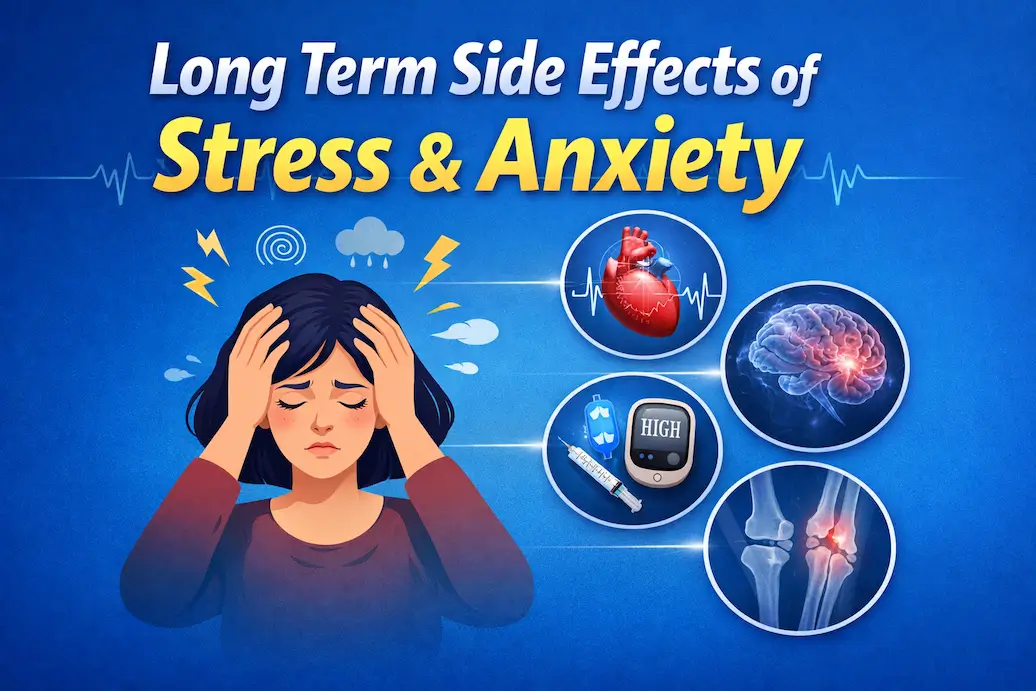
Long Term Side Effects of Stress & Anxiety can affect your health even though you can not understand it. You may think that the disease should be blamed for that annoying headache, frequent sleeplessness, or your declining productivity at work. But stress can actually be the culprit.
In this blog, Dr. Sanjay Jain(Consultant Psychiatrist in Jaipur) will explain how long term stress and anxiety affects your body and how you can manage it for long term mental & physical health.
What Happens in the Body During Stress?
When a person experiences stress or anxiety from long time then it affects almost all the systems of their body. When we goes through a stress or anxiety then our body activates a brain area called the Hypothalamus. The hypothalamus pain in the brain senses the stress. Then it sends signals to the pituitary gland which then then stimulates the adrenal glands. The adrenal glands release numerous hormones among which is cortisol hormone.
Cortisol is also called the “stress hormone.” Its main role is to prepare the body to fight stress and anxiety. This has following effects on our body:
- Blood Pressure Increase
- Sugar Level Increase
It also slows down essential body function which are not necessary for that time being like:
- Growth Process
- Digestive System
- Reproductive System
- Immune System
This response is helpful during short-term stressful situations. However, when stress continues for weeks, months or years then, their cortisol levels remains high which begins to damage various systems in the body.
Long Term Side Effects of Stress & Anxiety
the long term Side effects of stress & anxiety are:
1. Heart and Blood Vessel Problems
Long-term stress keeps the heart working harder than normal. High cortisol levels and constant stress can increase blood pressure and negatively impact the cardiovascular system.
Over time, this may lead to conditions such as:
- High blood pressure
- Heart disease
- Atherosclerosis (hardening of arteries)
2. Increased Risk of Diabetes
Cortisol raises blood sugar levels to provide energy during stressful situations. But if cortisol remains high for long periods then the body struggles to regulate glucose properly.
This can increase the risk of type 2 diabetes and metabolic disorders. This may lead to problems like:
- Kidney Failures
- Nerve Damages
- Eye Issues
3. Weakening of the Immune System
One of the most significant impacts of chronic stress is immune suppression.
When cortisol stays high:
- The immune response becomes weaker.
- The body becomes more vulnerable to infections.
- Wounds and illnesses take longer to heal.
This is why people under continuous stress often fall sick more frequently.
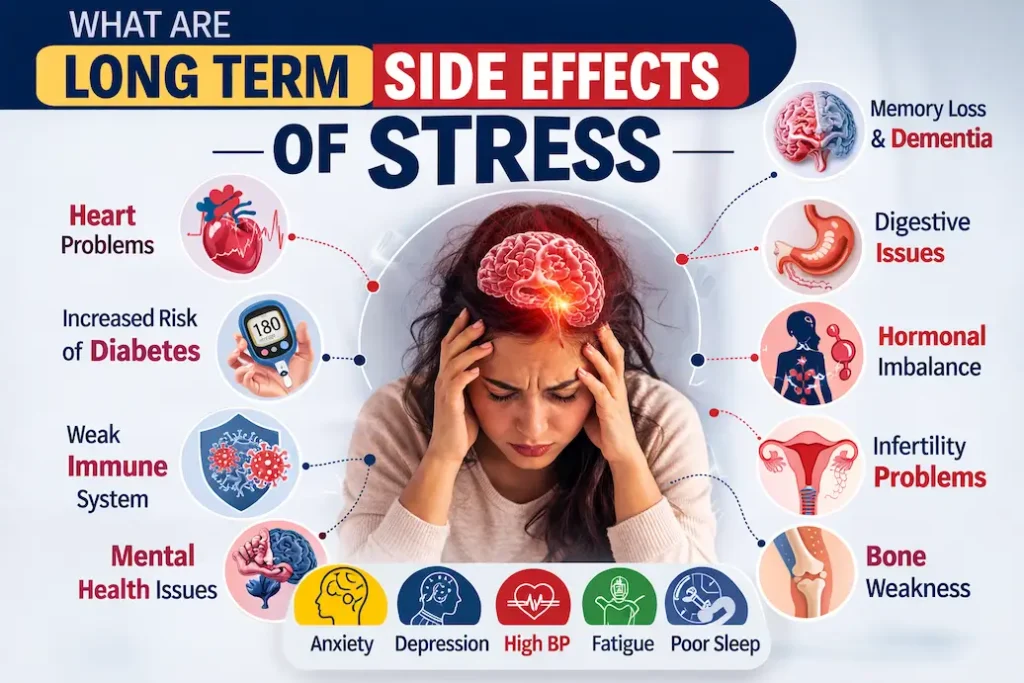
4. Effects on Brain and Mental Health
Stress doesn’t just affect the body—it also impacts the brain.
Prolonged exposure to stress hormones may contribute to:
- Depression
- Anxiety disorders
- Manic episodes
- Memory problems
Research also suggests that chronic stress may increase the risk of neurodegenerative conditions such as dementia and Alzheimer’s disease.
5. Digestive System Disturbances
Stress can interfere with normal digestion.
People experiencing chronic stress may face:
- Stomach discomfort
- Acid reflux
- Indigestion
- Irritable bowel symptoms
- Increase weight
This happens because the body diverts energy away from digestion during the stress response.
6. Bone Health and Osteoporosis
High cortisol levels can lead to weakening of bones which may later become cause of osteerioporosis.
Cortisol reduces calcium absorption required for good bone health. It also suppresses growth hormones, which may gradually lead to:
- Decreased bone density
- Increased risk of fractures
- Osteoporosis
7. Fertility and Reproductive Issues
Chronic stress can disturb hormonal balance in both men and women.
This imbalance may cause:
- Irregular menstrual cycles
- Reduced sperm quality
- Difficulty in conception
In severe cases, prolonged stress can contribute to infertility problems.
8. Increased Cancer Vulnerability
Since chronic stress weakens the immune system, the body becomes less effective at identifying and destroying abnormal cells.
Although stress alone does not directly cause cancer, long-term immune suppression may increase susceptibility to certain cancers.
Why Managing Stress Is So Important
Stress is not only a mental issue, it affects the entire body.
Cortisol plays an important role in survival during short bursts of stress, but when it remains elevated continuously, it can contribute to many serious health conditions.
Simple Ways to Reduce Chronic Stress
Managing stress early can prevent many long-term health problems. Some effective strategies include:
- Regular physical exercise
- Meditation and mindfulness practices
- Adequate sleep
- Balanced nutrition
- Limiting caffeine and alcohol
- Talking to a mental health professional when needed
Small lifestyle changes can significantly reduce stress and improve overall well-being.
Conclusion
Chronic stress silently affects almost every system in the body from the heart and brain to the immune and reproductive systems. If anyone in your family, friends or any person known is suffering from long term stress and anxiety then they should seek immediate medical help with a good psychiatrist.